Basic Info
Phylum : Tracheophyta
Sub-phylum : Euphyllophytina
Infra-phylum : Radiatopses
Class : Spermatopsida
Sub-class : Rosidae
Super-order : Rutanae
Order : Sapindales
Sub-order : Rutineae
Family : Aurantioideae
Tribe : Aurantieae
Sub-tribe : Citrinae
Genus : Citrus
Species : grandis
Scientific name: Citrus grandis
Author : Merril
Local name : Nobab
Common name : Pumelo
Habitat : plain
Sub-phylum : Euphyllophytina
Infra-phylum : Radiatopses
Class : Spermatopsida
Sub-class : Rosidae
Super-order : Rutanae
Order : Sapindales
Sub-order : Rutineae
Family : Aurantioideae
Tribe : Aurantieae
Sub-tribe : Citrinae
Genus : Citrus
Species : grandis
Scientific name: Citrus grandis
Author : Merril
Local name : Nobab
Common name : Pumelo
Habitat : plain
Morphology
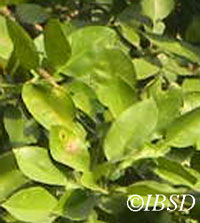
Leaf :
| Division | simple |
| Lamina Shape | orbicular |
| Lamina Length | 8.65 cm |
| Lamina Width | 5.22 cm |
| Lamina Attachment | brevipetiolate |
| Margin | dentate |
| Apex | obtuse |
| Petiole Length | 3.72 cm |
| Petiole Wing | present |
| Petiole Wing Wide | broad |
| Petiole Wing Shape | obcordate | Junction Between Petiole and Lamina | articulate |
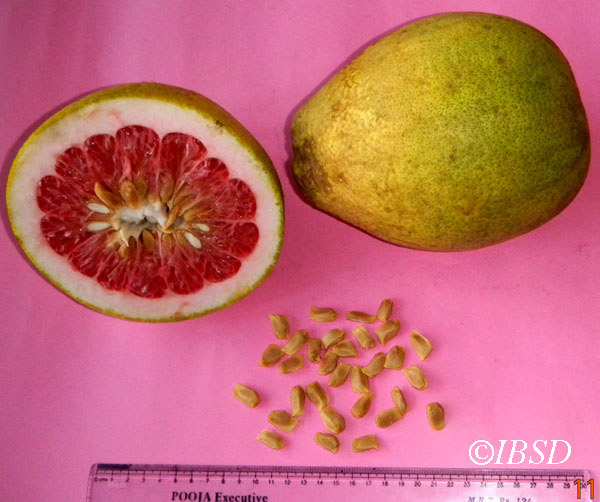
Fruit :
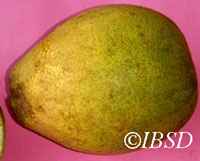
| Weight | 782.36 gm |
| Diameter | 16.25 cm |
| Length | 18.23 cm |
| Shape | pyriform |
| Base Shape | concave collared |
| Apex Shape | truncate |
| Skin Texture | rough |
| Segment | 14 nos. |
| Segment Shape Uniformity | present |
| Rind Colour | white |
| Rind Thickness | 1.85 cm |
| Pulp Colour | red |
| Pulp Colour Intensity | medium |
| Axis | semi |
| Axis Shape | irregular |
| Axis Diameter | 3.56 cm |
| Oil Density (sq.cm) | 41.38 |
| Oil Gland Nature | conspicuous |
| Areola | absent |
| Areola Diameter | 0 cm |
| Style Scar | absent |
Seed :
| Shape | semi-deltoid |
| Surface | smooth |
| Colour | brownish white |
| Length | 1.83 cm |
| Width | 0.85 cm |
| Cotyledon Colour | white |
| Average Seeds | 32-47 |

Uses
Consume as fresh fruit or as pickles, use in religious rituals and festivals, has aesthetic value but lesser economic value.
Reference
- Citrus By Federick S. Davies & L. Gene Albrigo(P18 & 20);
- Citrus Processing: A Complete Guide By Dan A. Kimball; Citrus Oils: Composition, Advanced Analytical Techniques, Contaminants and Biological Activity By Giovanni Dugo(P 475);
- Citrus Fruit: Biology, Technology and Evaluation By Milind S. Ladaniya(P 23, 202 & 103);
Links
- AGRIS : International Information System for the Agricultural Sciences and Technology
- CBD : Conservation of Biodiversity
- IT IS : Integrated Taxonomic Information System
- IOPI : International Organization for Plant Information
- IPNI : The International Plant Names Index
- Royal Botanic Gardens, Kew
- TROPICOS
- TOL : The Tree of Life Web Project
- TPL : The Plant List